
Fight me, cowards
On the use of AI art in Rooster King

It's hard to believe that some, nay many of you, have not seen my multimedia memoir masterpiece ROOSTER KING. What are you waiting for? It made the front page of Hacker News! It was nominated for a Webby! People have told me they were moved to tears by it, that it was the best website that they've seen in their entire lives.
I recently wrote an essay called Kamikaze Dreaming where I outlined the ten year slog that went into its creation, where I said that after I was finished I felt ready to die.
Now it's time for me to talk about all the AI art in it.
After a decade of trying and failing to suck enough dick to secure arts funding, I was suddenly able to produce the website entirely on my own due to the emergence of two technologies. One was a new CSS module called "scroll timeline animations" that made non-vomit-inducing parallax animations that don't look like shit possible. The other was the glorious emergence of AI art generators: a firehose of bullshit that let me plug the incredible chasms between the photos dug out of my camera roll and the images I was able to produce myself.
AI art is a live wire in the culture wars, and I rubbed my hands together furiously salivating over the controversy I might drum up.
I only used DALLE-2, a now extremely outdated image model that I pushed to its breaking point in order to find its authentic edges. Every medium comes to be defined by its flaws: VHS artifacts, pixel art blockiness, camera lens distortions. These initially undesirable limitations become the cherished hallmarks of nostalgia. It is very funny to me that just a few years on the inclusion of the colored blocks at the bottom right of the images already seems retro.
Here are a few of the AI art jokes that I baked into the prompts that influenced the style of the images throughout the project:
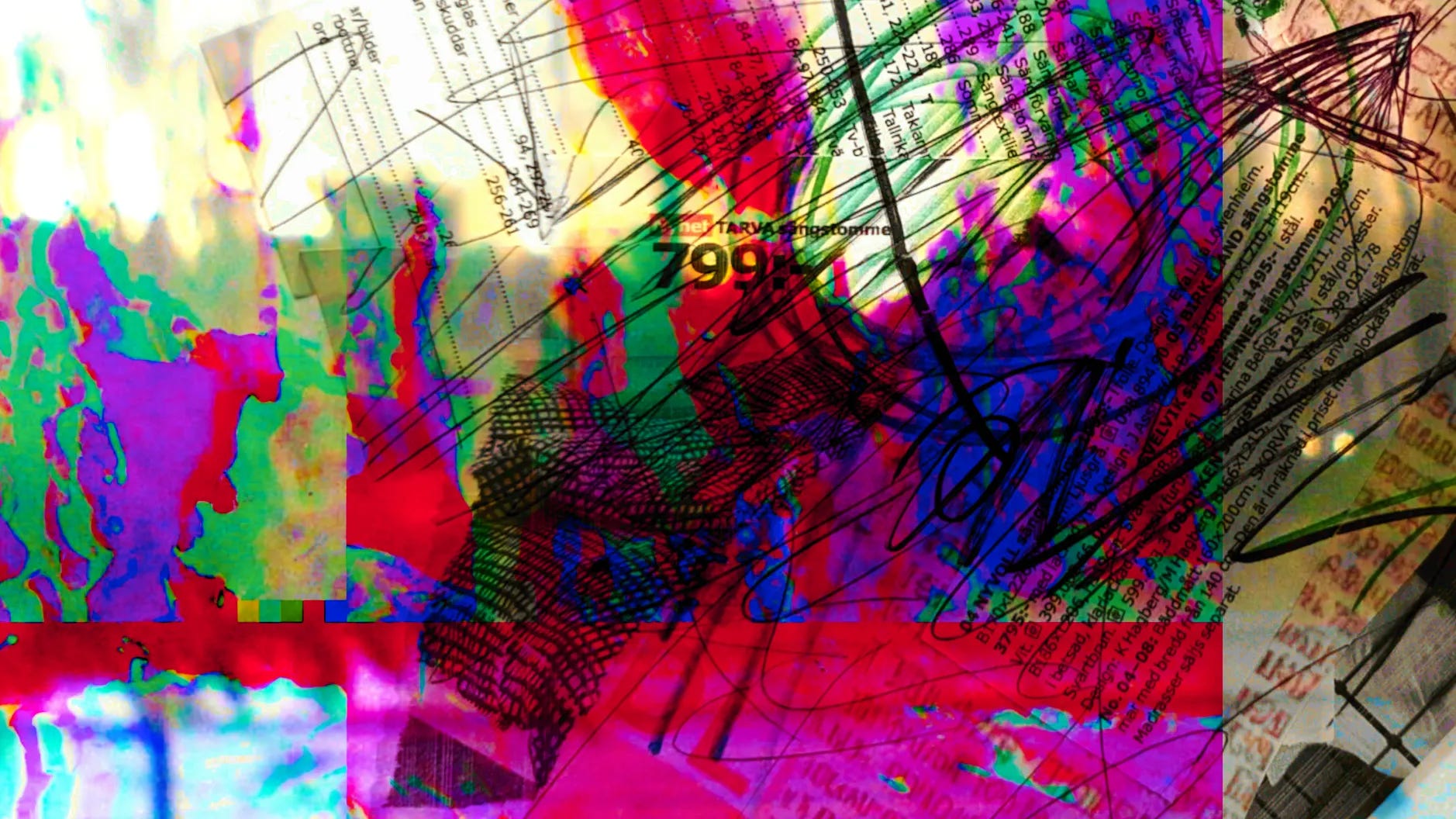
"glitch art"–depending on the definition you're using, these images uncontroversially are glitch art, rather than just AI reproductions of glitch art.
"process art"—process art was a movement concerned with finding meaning in the process that creates art, rather than the actual final project. It's funny to me to appropriate this style without following the process, which is where all of the meaning is supposed to be.
“postmodern”, “grunge art”, “multimedia”, “found art” etc—there is a certain thread in 20th century art (particularly in the 80s and 90s) that I used a variety of keywords to drive at where artists were concerned with appropriating existing art, and transforming it through degradation. They would do things like photocopy a photocopy of a photocopy, film a CRT screen, etc. I think AI art is this sort of thing in an oblique way. I also engaged in this sort of art process myself: filming the screen with my phone, etc.
“museum of indigenous cree art, c. 1857”—this is me playing around with actual cultural appropriation. The whole core of this AI art fight comes down to a collision between folk understandings of who owns certain art styles that are separate from letter-of-the-law "copyright". I'd almost be slightly worried I wouldn't get away with it if I weren't actually part Cree.
"collage", "decollage"—this whole project is a collage of images. The term decollage refers to the natural collages made of telephone poles and old billboards where new posters peel and decay over time. I printed off AI images of "collage" and ripped them up to use in a physical collage along with scraps of an old IKEA catalogue (with Swedish text alongside the AI gibberish)
There's also a fairly low-quality deepfake of Trump's voice during the psychosis sequence that I put in because the actual events took place in the aftermath of the 2016 election, and "World War III is being fought with magicians" is something that I believed to be true at that time. I was very surprised to learn after I recovered that Trump had actually been elected.
I imagined that people would be concerned with the AI art """theft""", and pictured the glee of pointing out the actual art that I have literally stolen. Is the fact that I'm following the standard geocities-era web 1.0 practice of ripping off each other's GIFs a sufficient excuse? Does the fact that I left the shutterstock logo visible mean anything?
But it turns out that nobody was mad about any of this. Nobody ever brought it up even once. I was, unfortunately, tragically considerate in my usage: dodging the easy AI slop targets like psychedelic vaporwave, anime girls with huge tits, or alien hands. When it made the front page of Hacker News, a site known for its disagreeable posters, all of the comments were universally glowing and positive.
I came ready for a fight, guns ablaze, but nobody took the bait. Now two years on I'm just sitting on this thing I poured a decade of my life into and it just feels like nobody really cared.
Where's my fucking hate mail?